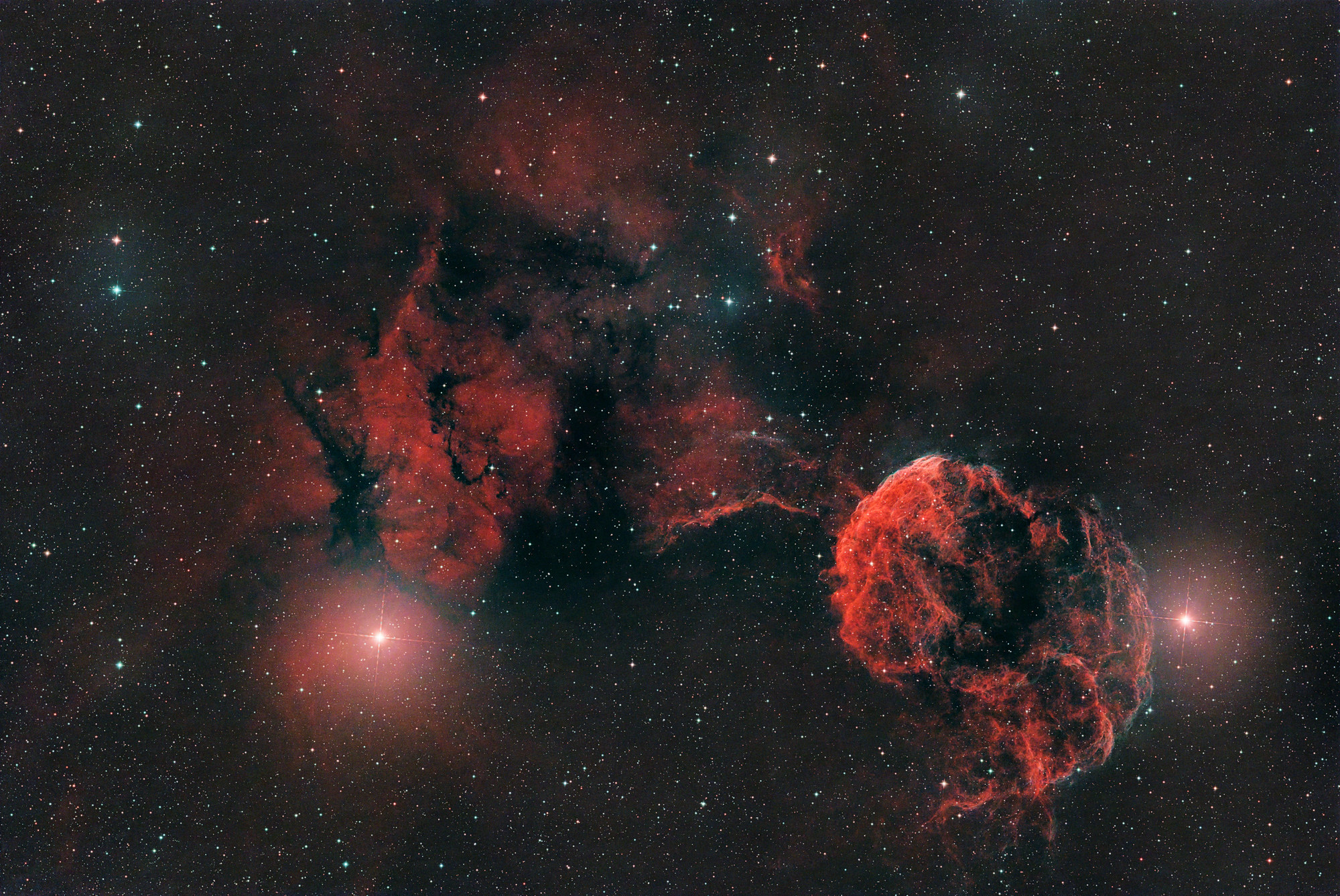
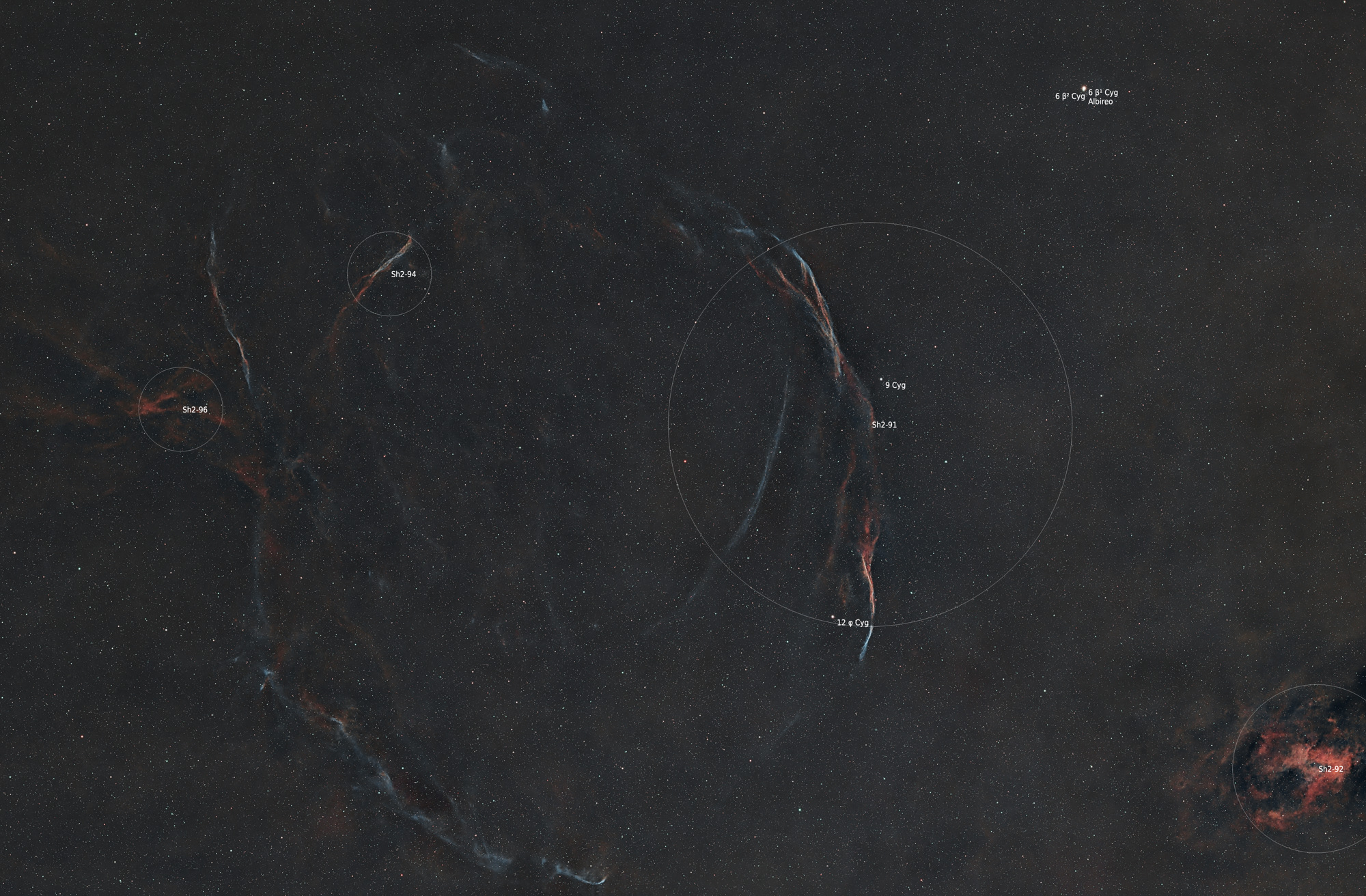
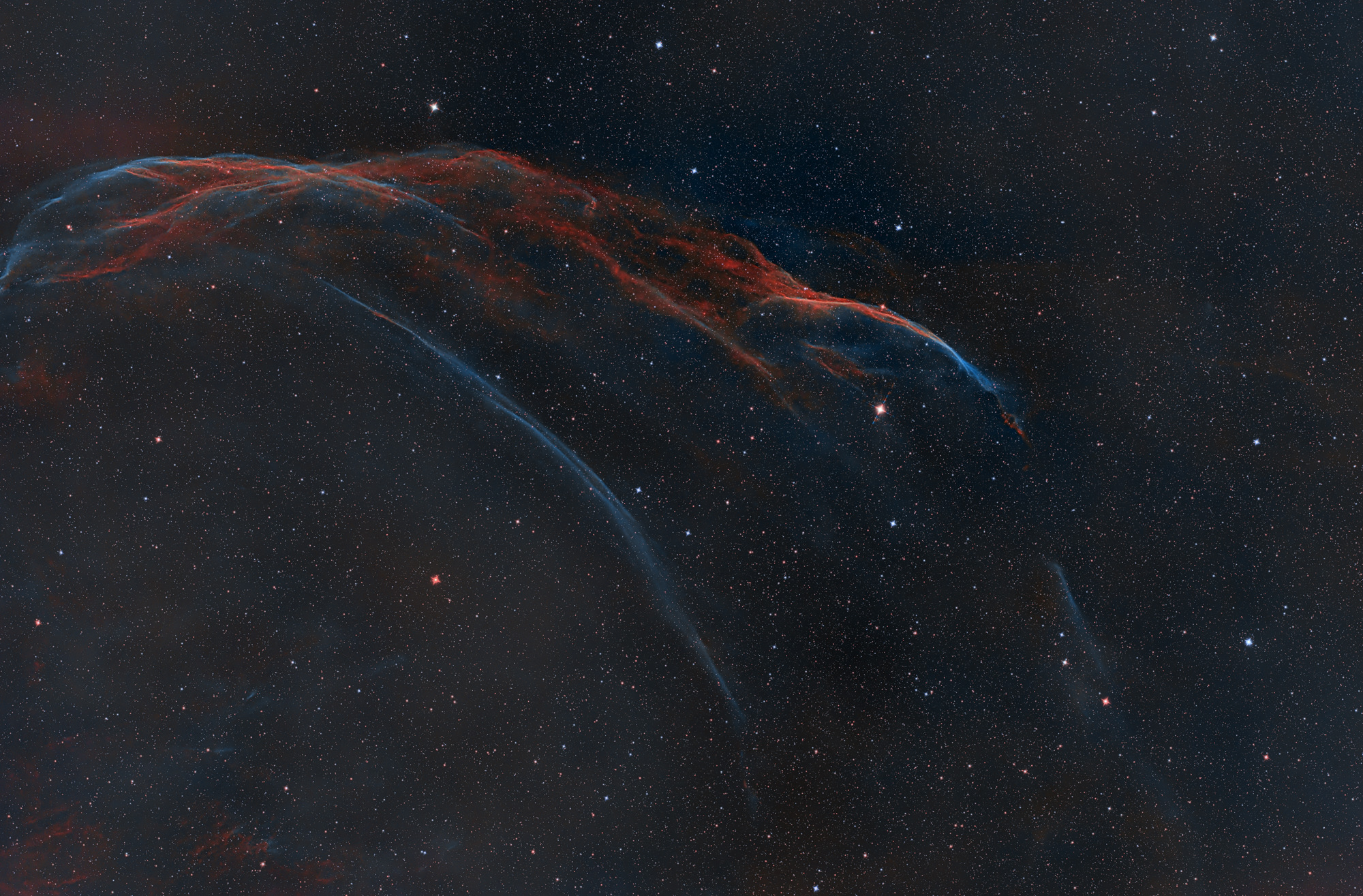
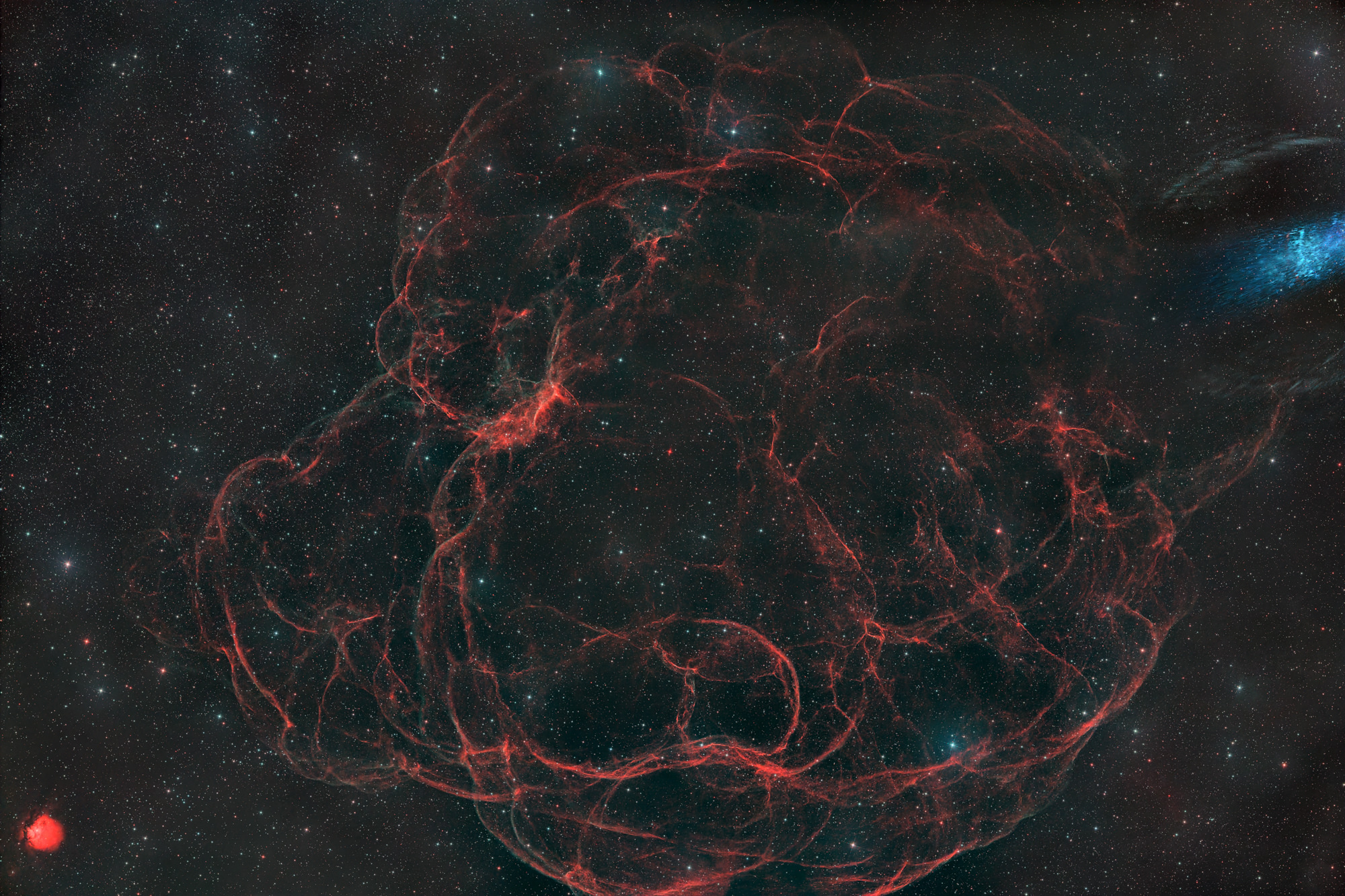
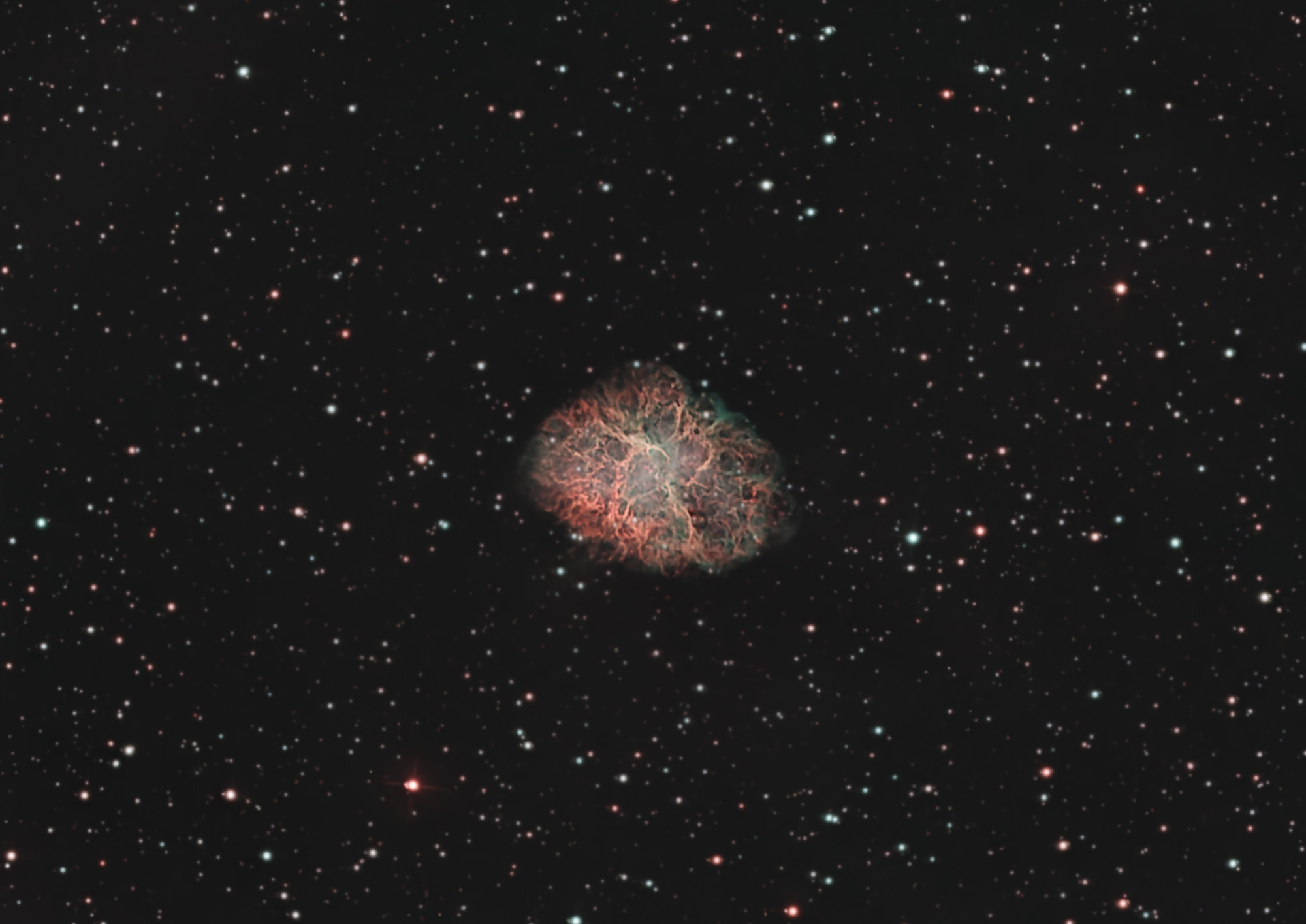
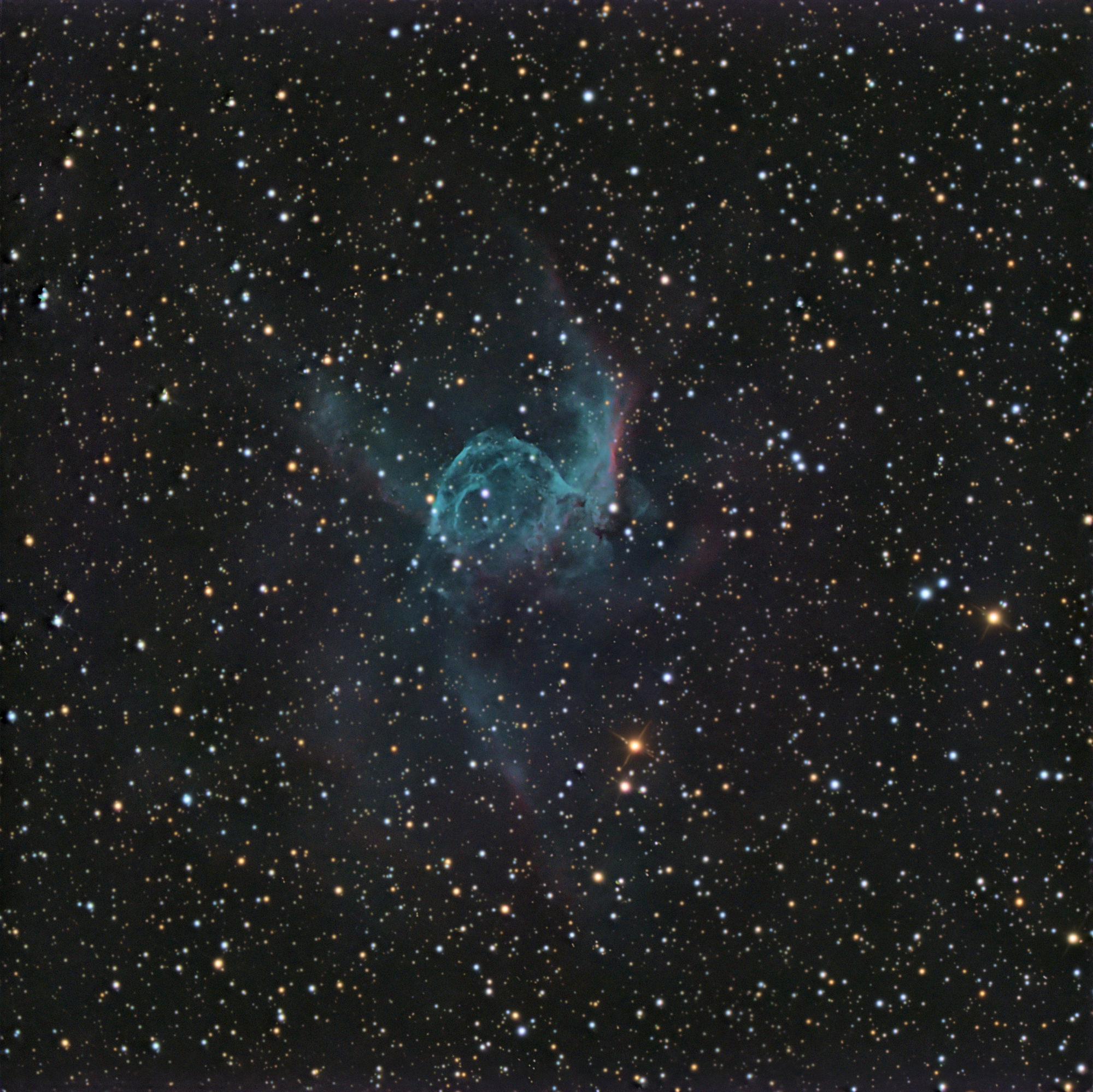
Supernova Remnants
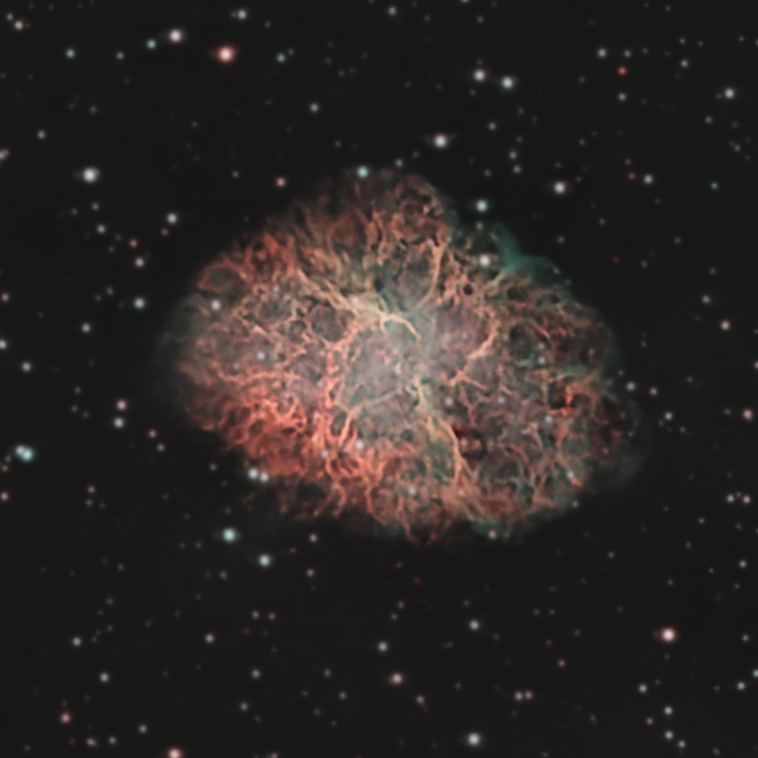
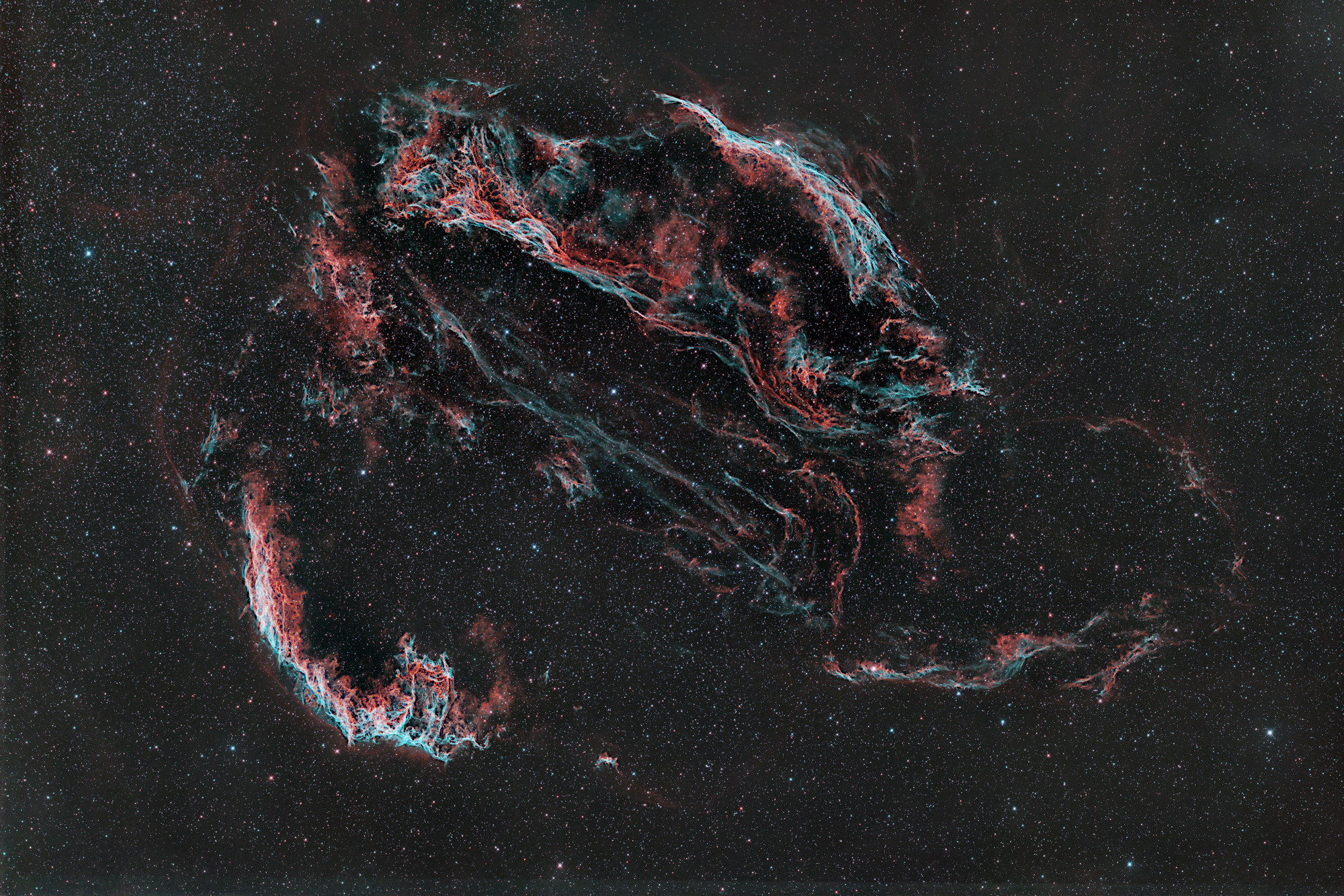
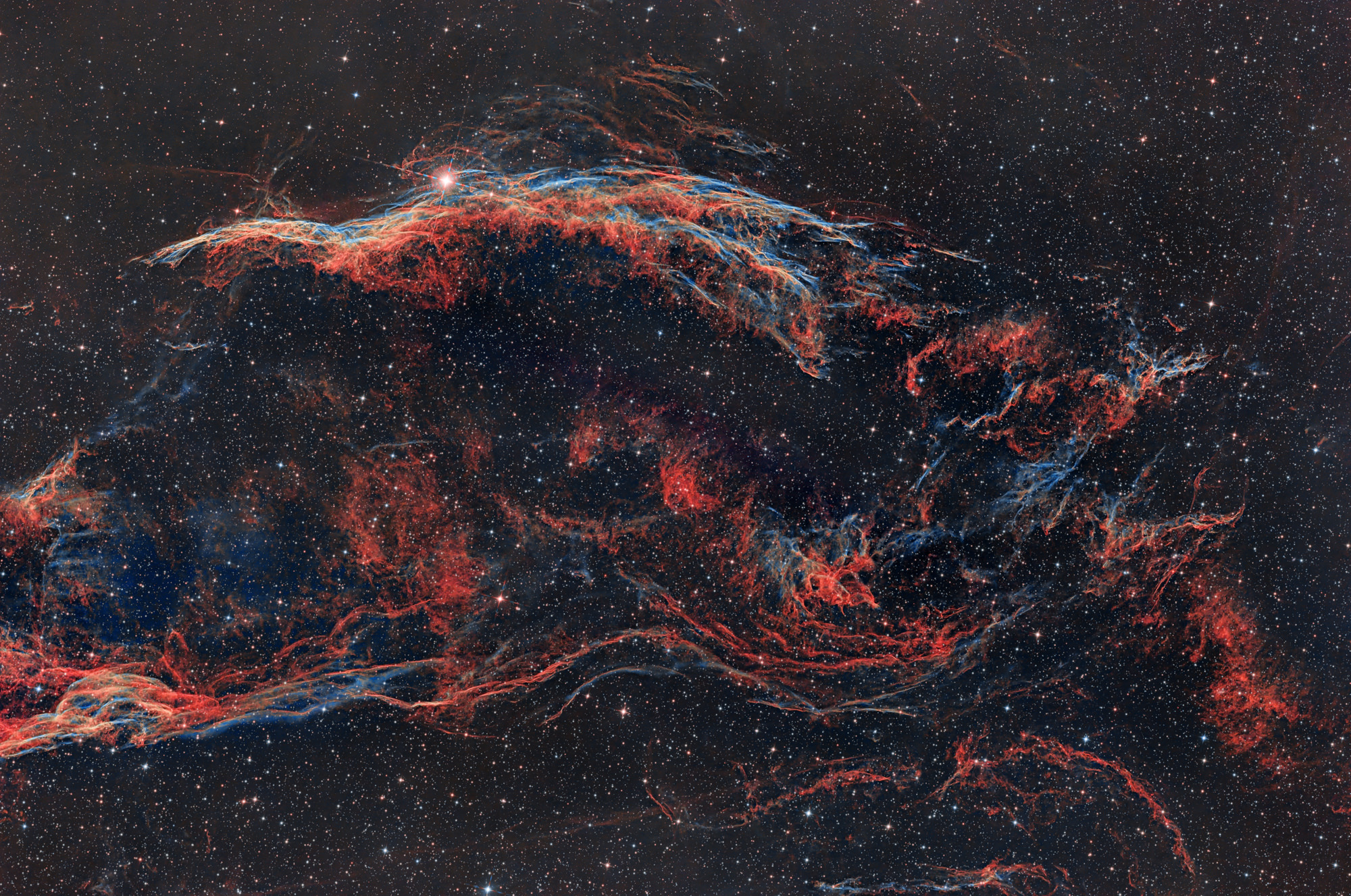
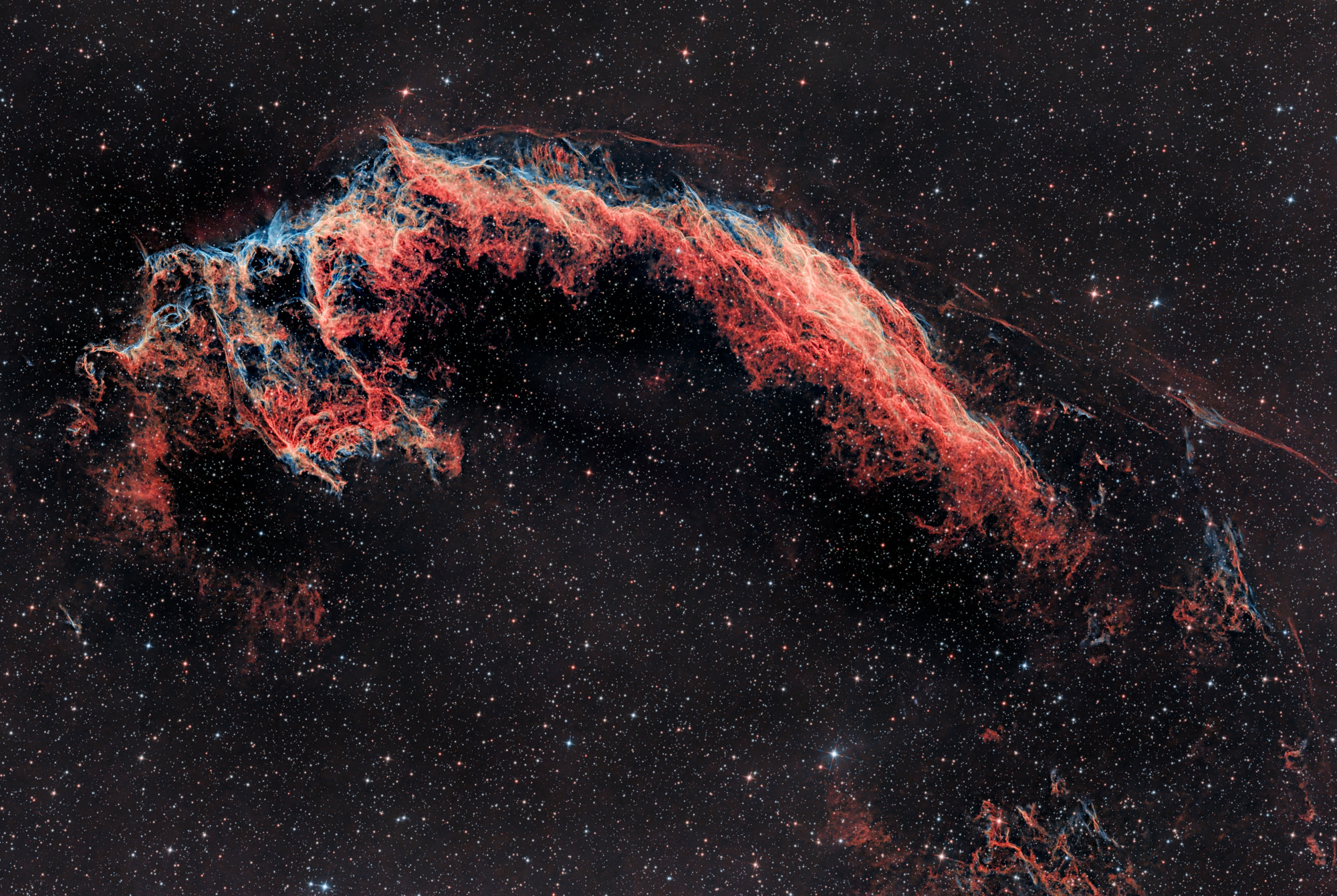
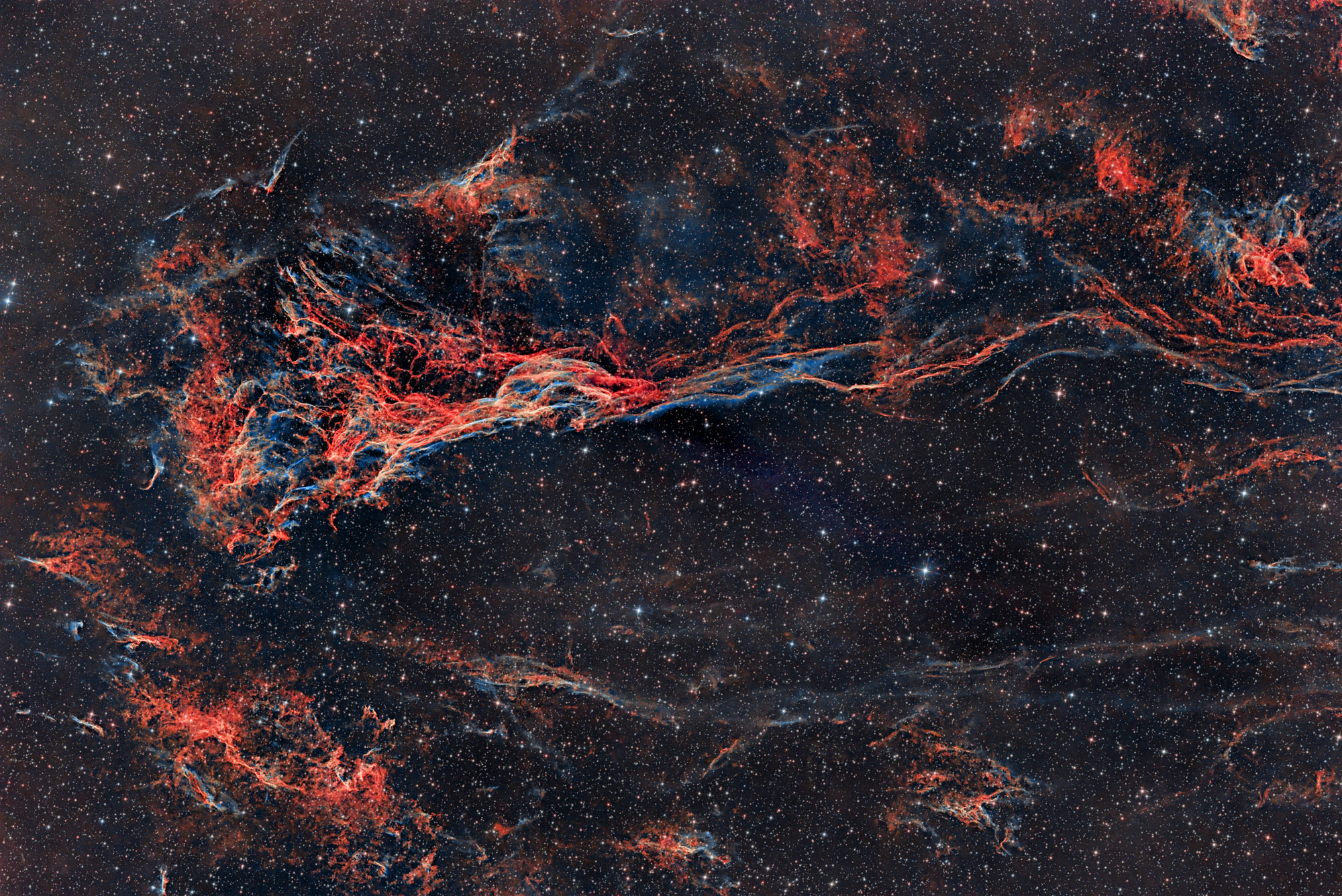
A supernova (from the Latin stella nova—"new star"—and super—"beyond"; plural: supernovae) is the brief, brilliant flare-up of a massive star at the end of its life, caused by an explosion that destroys the original star itself. The star's luminosity increases millions- to billions-fold, making it briefly as bright as an entire galaxy.
Cosmic Recycling
Matter ejected by a supernova travels at staggering speeds of up to 10,000 kilometers per second. This powerful shockwave sets the surrounding interstellar material into rapid motion, ultimately triggering the birth of new stars.
The Supernova: The Final Stage in the Life of Massive Stars
A Cosmic Biography...
Continue Reading
The life cycle of a star is entirely determined by its birth mass. Every star spends its life in a constant struggle between two forces:
1. gravity, which compresses it from the outside, and
2. radiation pressure from the combustion of hydrogen to helium inside, which pushes outwards and counteracts gravity. Once this balance is disrupted, the final phase of its existence begins.
1. gravity, which compresses it from the outside, and
2. radiation pressure from the combustion of hydrogen to helium inside, which pushes outwards and counteracts gravity. Once this balance is disrupted, the final phase of its existence begins.
The birth
From Nebula to Protostar...
Continue Reading
All stars share the same beginning in the interstellar medium:
- Cosmic Clouds: Giant clouds of gas and dust (primarily hydrogen) collapse under their own gravity.
- Protostar: The mass in the center contracts, becoming increasingly dense. Pressure and temperature rise to extreme levels.
- Ignition: When the core reaches approximately 15 million degrees, nuclear fusion ignites. Hydrogen fuses into helium. A star is born.
Adulthood
In this phase, stars spend...
Continue Reading
Stars spend about 90% of their lives in this phase. However, depending on their mass, they behave in completely different ways:
- Low-mass stars (like our Sun): They burn very efficiently. Their lifespan on the main sequence is around 10 billion years.
- High-mass stars (Blue Giants): They possess an enormous amount of fuel, but burn through it rapidly due to the immense pressure. Their lives often last only a few million years.
Different Ways of Dying
In principle, stars die in two different ways ...
Continue Reading
As soon as the hydrogen in the core is exhausted, the process of dying changes fundamentally:
| Phase / Situation | Small & Medium Stars (< 8 Solar Masses) | Massive Stars (> 8 solar masses) |
|---|---|---|
| Late Phase | Swell into a Red Giant. | They become gigantic Red Supergiants. |
| Element Fusion | Fuse helium into carbon and oxygen. | Fusing heavier elements up to iron. |
| The Finale | The outer envelope is shed as a Planetary Nebula. | The core collapses abruptly; a Supernova explosion plus implosion follows. While the core of the star implodes due to the immense gravity, the outer shell explodes. > 20 - 25 solar masses: Wolf-Rayet phase Star blows through outer hydrogen shells extremely fast stellar winds (up to 4,000 km/s) into space. |
| Final Stage | The naked core remains behind as a White Dwarf. | Ends, depending on the remnant mass: from 8 to 25 solar masses: as a extremely dense Neutron Star over 25 solar masses: as a Black Hole. |
What about our Sun ?
Approximately 4.6 billion years ago...
Continue Reading
About 4.6 billion years ago, the Sun formed from a cosmic cloud of gas and dust particles. With it, our solar system, including the planets, moons, and other celestial bodies, came into being.
Around its ten billionth birthday—that is, in a little over five billion years—the hydrogen supply in the Sun's core will be exhausted, and energy production will shift to its outer layers.
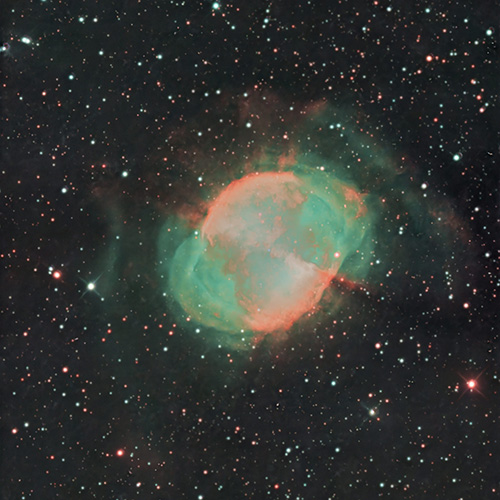
A planetary nebula consisting of a luminous gas cloud with a hot central star (white dwarf) will remain.
Explore More Astronomical Objects